There is a special feeling you get when you use a brand new computer for the first time. It is snappy, it opens programs instantly, and it feels clean. But over time, that feeling fades. You install programs you don’t use, you download files that clutter up the hard drive, and maybe you pick up a few viruses along the way. Eventually, your lightning-fast machine starts to feel like it is walking through mud. You click a button, and you have time to go make a coffee before anything happens. This is frustrating, but it is not the end of the world. It usually just means it is time for a fresh start.
Installing the Windows operating system is one of the most useful skills you can learn as a computer owner. Many people are terrified of this process. They think it is something only computer geniuses or IT professionals can do. They worry they will break their computer or lose all their data forever. While it is true that you need to be careful, the process is actually very logical and much easier than it used to be. You do not need to pay a repair shop hundreds of dollars to do this for you. With a little patience and the right instructions, you can do it yourself in an afternoon. This guide is going to walk you through the entire process of installing Windows, from backing up your photos to seeing that fresh new desktop screen. We will use simple, plain English to explain every step, so you can feel confident and in control of your technology.
Why You Might Need to Reinstall Windows
Before we dive into the “how,” let’s talk about the “why.” Why would you want to wipe your computer and start over? The most common reason is performance. Over months and years of use, Windows accumulates what we call “digital rot.” Old registry keys, leftover files from uninstalled games, and background services that you don’t need all pile up. It is like a closet that has become so messy you can’t find your shoes. A fresh install is like emptying the closet completely and only putting back the things you actually wear. It makes the system run like it did on day one.
Another major reason is viruses or malware. Sometimes, antivirus software isn’t enough. If your computer is acting strangely—opening pop-ups, changing your homepage, or running fans at full speed when you aren’t doing anything—you might have a deep infection. The only way to be 100% sure the virus is gone is to wipe the hard drive and reinstall Windows. It is the nuclear option, but it works every time. You might also need to install Windows if you have built a new computer from scratch or if you have replaced your old mechanical hard drive with a super-fast SSD (Solid State Drive). Whatever your reason, the result is the same: a clean, fast, and stable computer that is ready to work.
Getting Ready: What You Need Before You Start
You cannot just wake up and decide to install Windows without a little bit of preparation. It is like painting a room; the preparation takes longer than the actual painting, but it is the most important part. First, you need a computer that works. If the computer you are fixing is completely dead, you will need to borrow a friend’s computer for about thirty minutes to create the installation tool.
You will need a USB flash drive. This is going to be your magic wand. It needs to be at least 8GB in size, and it should be empty. If there are photos on it, move them somewhere else, because this process will erase everything on the stick. You also need a stable internet connection. You are going to be downloading the Windows installation files from Microsoft, which are quite large (several gigabytes). Finally, you need a little bit of time. The installation itself might only take twenty minutes on a fast computer, but the setup and updates afterward can take an hour or two. Don’t try to do this right before a big meeting or a deadline. Give yourself a relaxed Saturday afternoon so you don’t feel rushed.
The Most Important Step: Backing Up Your Data
This is the step you cannot skip. I repeat: do not skip this step. When we say we are doing a “clean install” of Windows, we mean we are erasing the hard drive. Everything will go. Your wedding photos, your tax documents, your saved games, and that novel you have been writing will disappear forever if you do not back them up.
Take an external hard drive or a large USB stick (different from the one we use for the installation) and plug it into your computer. Go through your folders. Check your “Documents,” “Pictures,” “Videos,” and “Desktop” folders. Copy everything you want to keep onto the external drive. Don’t forget to check your “Downloads” folder, too; we often leave important PDF files or installers in there. If you don’t have an external drive, you can use cloud storage services like Google Drive, OneDrive, or Dropbox. Upload your important files to the cloud.
Also, think about your passwords. If you let your web browser remember all your passwords for you, make sure you know them or have them written down. When you reinstall Windows, your browser will be reset, and you will need to log in to your email, bank, and social media again. Taking an hour to double-check your backup will save you a lifetime of regret. Once you are sure—really sure—that you have everything, you can unplug the backup drive and put it somewhere safe.
Creating Your Bootable USB Installation Drive
Now we need to create the tool that will install Windows. In the old days, we used CD-ROMs or DVDs. Today, we use USB drives. Microsoft has made this very easy with a free program called the “Media Creation Tool.” You do not need to go to a sketchy website to get this; you get it directly from Microsoft.
Go to a search engine and type “Download Windows 10” or “Download Windows 11” (whichever version you want). Click on the official Microsoft link. You will see a button that says “Download tool now.” Click it. Once the file downloads, open it. It will ask you to accept some terms and conditions. Say yes. Then it will ask, “What do you want to do?” Select the option that says “Create installation media (USB flash drive, DVD, or ISO file) for another PC.”
Plug your empty 8GB USB drive into the computer. The tool will ask you to select the language and edition of Windows. The default settings are usually fine. Then it will ask which media to use. Select “USB flash drive.” click Next, and select your USB drive from the list. Now, the tool will start downloading Windows and writing it to the USB stick. This can take a while depending on your internet speed. You can go make a sandwich while it works. When it says “Your USB flash drive is ready,” click Finish. You now have a powerful repair tool in your pocket.
Entering the BIOS: The Scary Part Made Simple
This is the part that scares most people. To install Windows, you need to tell your computer to start up from the USB stick instead of the hard drive. To do this, you have to enter a special menu called the BIOS or UEFI. This menu lives on the motherboard of your computer, underneath Windows.
Shut down your computer completely. Now, turn it back on. As soon as you press the power button, you need to start tapping a specific key on your keyboard repeatedly. This key is different for every computer manufacturer. It is usually F2, F12, Delete, or Escape. Watch the screen closely as it turns on; it will often flash a message like “Press F2 for Setup” or “Press F12 for Boot Menu.” If you miss it and Windows starts loading, just shut down and try again.
Once you are in the BIOS or Boot Menu, it will look different from normal Windows. It might be a blue screen with grey text, or a fancy graphical menu. Don’t panic. You are looking for a tab called “Boot” or “Boot Order.” You want to change the order so that “USB Drive” or “Removable Device” is at the very top of the list. This tells the computer: “Hey, look for a USB stick first. If you don’t find one, then look at the hard drive.” Save your changes (usually by pressing F10) and exit. Your computer will restart.
The Installation Process: Step-by-Step
If you did the previous step correctly, your computer will restart, and instead of your old Windows login screen, you will see a purple or blue screen with the Windows logo. Congratulations! You are in the installer. The first screen will ask you to confirm your language, time format, and keyboard method. Usually, you just click “Next.”
Then you will see a big button in the middle of the screen that says “Install Now.” Click it. The setup will start. It might ask you for a “Product Key.” This is a 25-character code that proves you paid for Windows. If your computer already had Windows installed when you bought it, the key is embedded in the motherboard, and you can just click “I don’t have a product key.” Windows will figure it out later automatically.
Next, it will ask which version of Windows you want to install (Home, Pro, etc.). Make sure you choose the version you own. If you choose “Pro” but you only have a license for “Home,” it won’t activate later. Then, accept the license terms. Finally, you will see two options: “Upgrade” or “Custom: Install Windows only.” Since we want a fresh, clean start, you must choose “Custom.” This gives us full control over the hard drive.
Partitioning the Drive: Where Does Windows Go
This screen shows you your hard drive. It might look confusing. You might see a list of things like “Drive 0 Partition 1,” “Drive 0 Partition 2,” and so on. A partition is just a slice of the hard drive pie. Your old Windows installation created several small slices for recovery and system files.
Since we backed up all our data, we want to wipe this slate clean. Select each partition on the list one by one and click “Delete.” You will get a warning saying data will be lost. Say okay. Keep doing this until you are left with just one single entry that says “Drive 0 Unallocated Space.” This means the entire hard drive is empty and ready for a new life.
Select that “Unallocated Space” and click “Next.” You don’t need to create new partitions yourself; Windows will do it automatically. Once you click Next, the installation begins. You will see a list of tasks like “Copying Windows files” and “Getting files ready.” This is the part where you wait. The computer might restart a few times. Do not pull out the USB stick yet. Just let it do its thing.
The Setup Screen: Personalizing Your Experience
After the files are copied and the computer restarts, you will be greeted by an automated voice assistant (Cortana). She will guide you through the setup. You can mute her by clicking the microphone icon if you prefer silence. This phase is called the “Out of Box Experience” or OOBE. It is designed to be friendly.
It will ask you for your region (country) and keyboard layout. Then it will ask to connect to a Wi-Fi network. Connect to your home Wi-Fi. Next, it will ask how you want to set up the device. Choose “Set up for personal use.” You will be asked to sign in with a Microsoft Account (like an Outlook or Hotmail email). It is recommended to do this because it syncs your settings and helps you reset your password if you forget it.
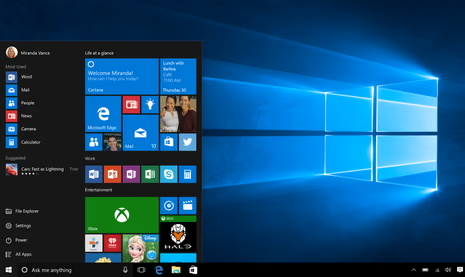
Then comes the privacy settings. Windows will ask permission to use your location, your voice data, and send diagnostic info to Microsoft. Read these carefully. Many people choose to turn off the advertising ID and location services to protect their privacy, but it is up to you. Finally, it might ask if you want to try Office 365 or Game Pass. You can just click “No thanks” or “Skip for now” if you aren’t interested. After a few more minutes of a screen that says “We are getting things ready for you,” you will land on the brand new Windows desktop.
Post-Installation: Drivers and Updates
You did it! You are on the desktop. But you aren’t quite finished. You might notice that the icons look huge or fuzzy, or that the sound isn’t working perfectly. This is because your computer is missing “Drivers.” Drivers are small pieces of software that tell Windows how to talk to your specific hardware, like your graphics card or your speakers.
The good news is that Windows 10 and 11 are very smart. They will find most drivers automatically. Go to the Start Menu, type “Check for updates,” and open the Windows Update settings. Click the “Check for updates” button. Your computer will start downloading a lot of stuff. It will find the drivers for your screen, your Wi-Fi, and your sound. Let it run. You might have to restart the computer a couple of times.
Once Windows Update says you are up to date, check your Device Manager. Right-click the Start button and select “Device Manager.” Look for any yellow exclamation marks. If you don’t see any, your drivers are perfect. If you are a gamer, you might want to go to the website of your graphics card manufacturer (NVIDIA or AMD) to download the specific driver for your card to get the best gaming performance.
Conclusion: Enjoy Your New Fast PC
Congratulations. You have successfully wiped your computer and installed a fresh copy of Windows. You have saved yourself the cost of a technician, and you have learned a valuable skill. Take a moment to appreciate how fast the menus open and how clean the desktop looks.
Now begins the fun part of moving back in. You can plug in your external backup drive and copy your photos and documents back into the “Pictures” and “Documents” folders. You can download your web browser of choice, whether it is Chrome, Firefox, or just stick with Edge. You can install your favorite games and apps. But this time, you can be selective. Don’t install things you don’t need. Keep your digital house clean.
Installing an operating system seems like a huge, scary task, but as you have seen, it is just a series of logical steps. Preparation, execution, and cleanup. By taking control of your computer’s software, you ensure that it runs smoothly and securely. You are no longer at the mercy of a slow machine; you are the master of your technology. Enjoy your “new” computer.